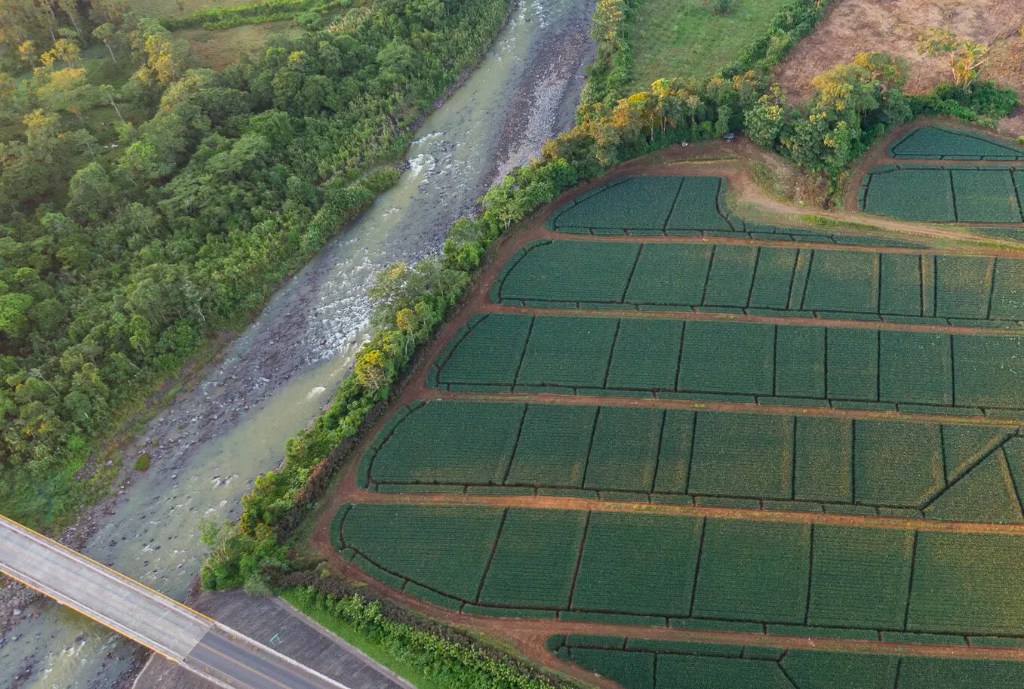
Environmental Impacts of Pineapple Plantations in Costa Rica
By Miguel Guevara, Founder of Grow Jungles
Key Insights
- •Costa Rica exports nearly 45% of the world's pineapples, but pineapple plantations are complete monocultures where nothing else can grow—causing permanent soil degradation and desert-like conditions after harvesting
- •The industry uses 14-16 different pesticide treatments per crop cycle, with up to 20kg of active ingredient per hectare—among the highest pesticide use per cropland globally—contaminating waterways and poisoning downstream communities
- •Over 5,500 hectares of rainforest were illegally converted to pineapple production between 2000-2015, with another 3,824 hectares in protected areas and 16,385 hectares in wetlands damaged by 2017
- •Workers, primarily undocumented migrants from Nicaragua, face exploitation including low wages, long hours, dangerous conditions from spiky plants, toxic chemical exposure without protective gear, and discrimination that prevents unionization
- •Wildlife like sloths and howler monkeys show severe deformities and abnormalities from pesticide consumption—sloths born with missing digits and malformed limbs, howler monkeys showing yellow fur patches from sulfur poisoning in their food sources
The high demand for fresh pineapple in North America and the UK proves detrimental to people living and working in the Global South. It has created a system where companies and consumers of the north benefit from high profits. At the same time, those in the growing regions of the south suffer from life-threatening environmental impacts of the pineapple industry.
Pineapple is a tropical fruit that grows best in low elevations between 30° N and 25° S with a temperature range between 18.33° – 45° C (65°-95° F). This makes it desirable in sensitive rainforest ecosystems like Costa Rica and the Philippines.
The average pineapple plant produces three fruits in its lifetime, which grows one at a time over its seven-year lifespan. The first fruit appears after the second year, and then one fruit over the next two years.
Environmental Impacts of Pineapple Plantations
According to Nicolas Boeglin, professor of public human rights in the law faculty at the University of Costa Rica, nothing else grows in a field of pineapples but the pineapple plant. No animals, insects, or other plants are visible. There is a constant erosion of the soils, but the real tragedy occurs when the plantation is removed. All that remains is desert.
Marco Retana, professor of biology at the University of Costa Rica, continues that discussion by saying, "There are no grasses around them [the pineapple plants]. These are pineapples on totally exposed land. This causes serious erosion problems. After the land is used for growing pineapples, it can hardly have any other function."
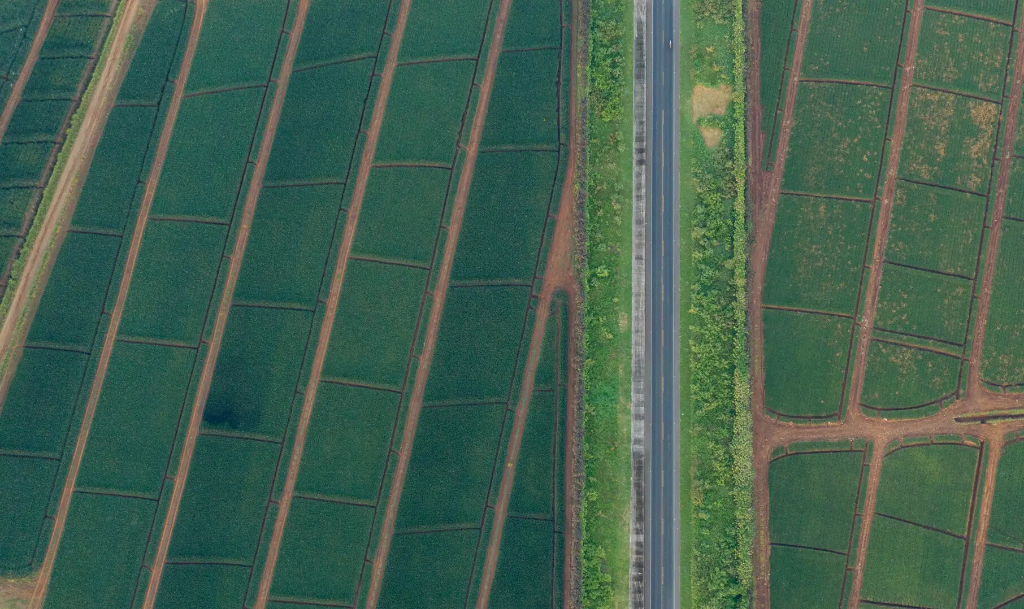
Aerial view of pineapple plantation rows showing monoculture grid pattern
Chemicals are used in all stages of the pineapple growing process. Fertilizers, herbicides, insecticides, and nematicides are used while prepping the land. Insecticides are used in treating suckers during the planting stage. As the plant grows, it requires herbicides, fertilizers, insecticides, fungicides, and hormone growth regulators while maintaining the crop. At harvest time, they use a ripening agent before harvest to induce maturation.
As most pineapple plantations are in wet areas, chemicals transported with seasonal rains are a significant threat to humans, flora, and fauna in the local region. Contamination leads to life-threatening illnesses and limited access to clean drinking water downstream.
Pineapple Cultivation Impacts Costa Rica
Costa Rica exports more pineapples worldwide than any other country, accounting for nearly 45% of all exports. Pineapple exports have grown to nearly $1 billion in sales per year, equal to banana exports. But in a banana field, you will see animals, insects, and other plants. Pineapple fields are truly a monoculture.
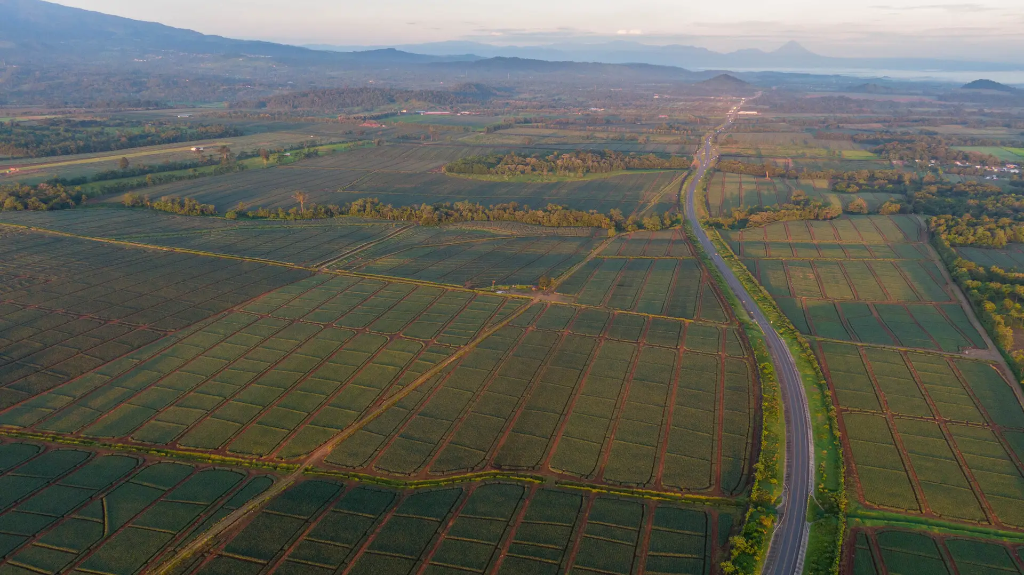
Landscape view of extensive pineapple plantation operations across Costa Rican countryside
In the 2019 Costa Rica State of the Nation report, satellite images from 2017 show 3,824 hectares of pineapple crops planted in protected wild areas and 16,385 hectares of wetland. Another study found that over 5,500 hectares of forest converted to pineapple production illegally between 2000 and 2015.
Eva Carazo, a researcher at the Universidad Estatal a Distancia, studies the health and environmental impacts of pineapple plantations on local communities. Eva says that pineapple crops are replacing traditionally grown crops, such as maize, beans, rice, vegetables, and others, creating a healthy diversity. These diverse crops also allow local people to have products to sell at local markets.
She argues that the growth of the pineapple industry is correlated to changes in agricultural policies in Costa Rica in hopes of attracting international investment and an increase in food exports and jobs. But the jobs are of poor quality and attract undocumented workers from Panama and Nicaragua. The absence of worker rights results in poor safety practices and low pay for people who have limited choices.
Human Rights Issue
Many agriculture workers in Costa Rica are undocumented migrant workers from Nicaragua. Even though the companies threatened them with deportation, they work in the fields if they show any signs of trouble. This creates an option-less, flexible workforce. Most work six days a week for long hours and don't earn a livable wage.
At the end of the picking season, they are let-go and re-hired when the next season arrives. They live in fear of not being hired again, which also keeps them from having any discussions with those trying to form unions.
Just the nature of the plant creates difficulties, being spiky and difficult to handle. Many suffer from damage to their fingers if gloves are not provided. Plus, the fruit grows low to the ground, which requires stooping to harvest during the hottest parts of the day.
Unions are formed to combat this issue, but migrants are often discriminated against because they are not employed legally.
Women, making up a small portion of the workers, suffer from discrimination and sexual harassment at the worksite.
Toxic chemicals, and recently the COVID-19 pandemic, creates a health risk as well. Personal protective equipment is not usually provided to these workers even though the chemicals used in the fields are known carcinogens. It has also been documented that there are no safety precautions to prevent the spread of COVID-19, such as masks or social distancing.
Effects on the Ecosystem
Fernando Ramirez, leading agronomist at Costa Rica's Toxic Substances Institute, explains, "Pineapples need very large amounts of pesticides, about 20kg of active ingredient per hectare per cycle. The soil is sterilized; biodiversity is eliminated. Fourteen to 16 different types of treatment are typically needed, and many have to be applied several times."
According to a recent report from the Food and Agriculture Organization (FAO), Costa Rica is one of the countries with the highest pesticide use per cropland in the world. Crops that are destined for exportation, such as bananas and pineapple, grow in the lowlands, where the toxic runoff affects estuarine ecosystems. The effect of pesticides is exacerbated by the simple fact that Costa Rica is a rainforest. Those heavy rains carry pesticides downstream from the fields and pollute the water supplies of distant communities.
Clearing the rainforest also creates erosion and sedimentation of waterways, affecting aquatic life and humans who depend on these sources for drinking water. Six thousand people along the Atlantic Coast depend on government-delivered drinking water due to contamination. There is also a rise in congenital disabilities, skin disease, and respiratory issues in those communities.
Not to mention how it affects ocean life as the water cycle continues into the Atlantic.
Diazinon, which is highly toxic to birds, bees, and most other insects, is one of the insecticides that represent a high risk for Costa Rican estuarine environments due to its widespread use in pineapple plantations. More than 5 Kg is used per hectare per year.
Pesticides, such as paraquat and the herbicide bromacil (used in round-up) used on crops, contaminate waterways near pineapple plantations.
Effects on Wildlife Habitat
Wildlife of the region is also affected by habitat fragmentation and pesticides being used on pineapple plantations. For example, sloths and howler monkeys are folivores, which means they feed on leaves. Abnormalities in these species are showing up in areas with high levels of agriculture and rainforest disturbances. Scientists believe that they are most likely consuming pesticides and fertilizers directly from the leaves.
Sloths are born with deformities such as missing or extra fingers and toes, misshapen limbs, or malformed ears. Most of those affected have a lifespan of only a few months.
Howler monkeys have been documented with patches of yellow fur, which is believed to be from overeating sulfur from pesticides on the leaves they consume. Again, this abnormality is showing in howler monkeys living in areas close to pineapple and banana plantations.
Buying pineapple grown on a plantation in Costa Rica for $2 has a much more significant impact on those living and working around the fields. Changing our view to include all costs is necessary to stop the destruction of rainforests and the barrage of chemicals flowing downstream and entering the water cycle. Some people have begun to question whether pineapple cultivation is a good fit in a country that prides itself on ecological protection.
Photos by Ivan Salazar.
You Might Also Like
More stories on similar topics
Share this story
Related Stories
The Burned Ranch at the End of the World
Gold, jaguars, and the long reinvention of a jungle village. Juan Cubillo Gomez is knee-deep in a creek behind his house in Rancho Quemado, holding a shallow metal pan the way you hold something you have held ten thousand times before. After sixty years of panning for gold, he now guides visitors through the mechanics of artisanal gold panning while explaining what he is doing to paying guests — a performance that is also a reality.
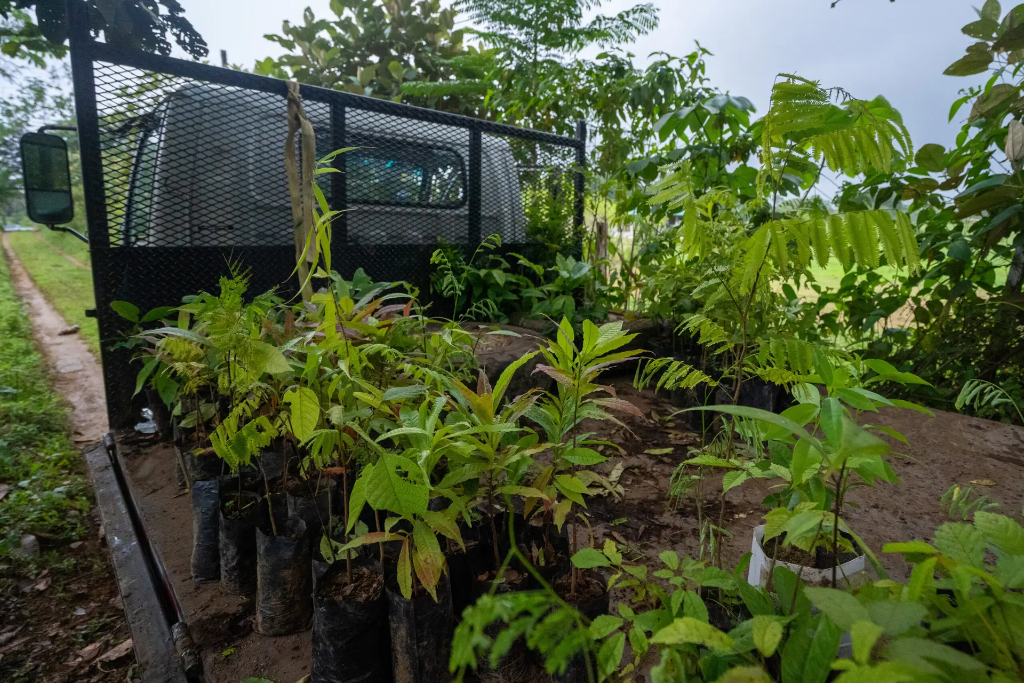
Successful Reforestation Project in Osa Peninsula
Grow Jungles partnered with Osa Conservation to plant 1,500 native trees across a two-hectare plot on the Osa Peninsula, including critically endangered Canelillo species. This reforestation initiative demonstrates strategic conservation efforts to restore biodiversity in one of the world's most biodiverse regions.
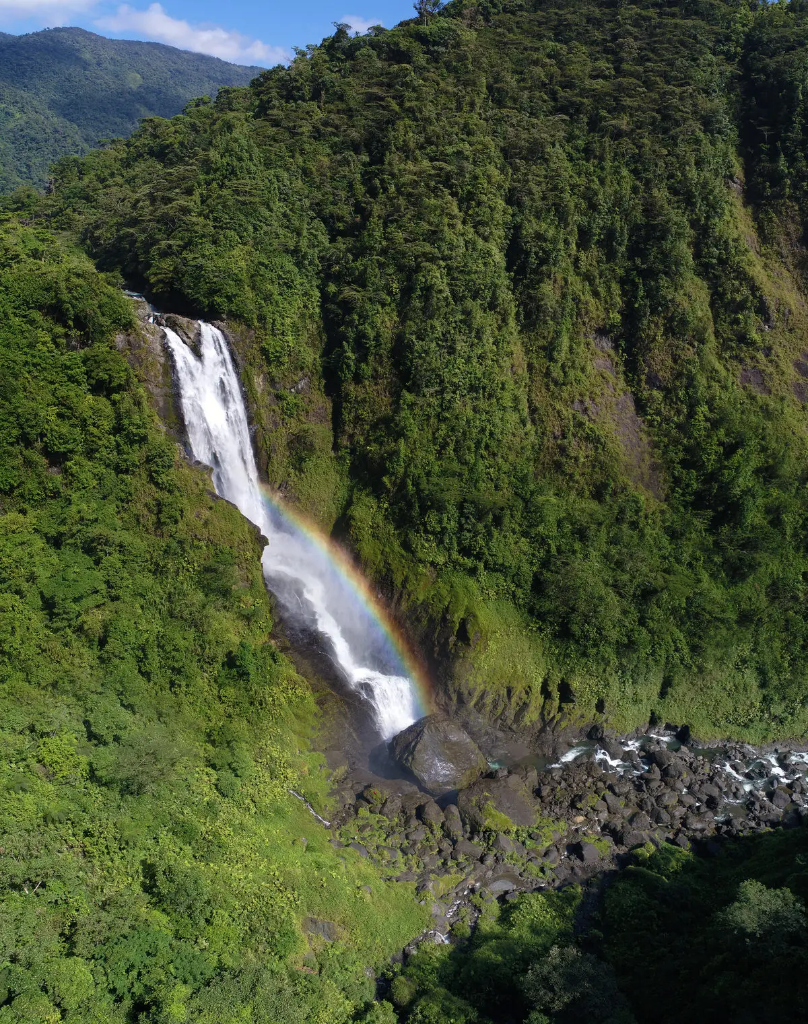
Talamanca: Conservation's Next Frontier
The Cordillera de Talamanca stretches from Southeast Costa Rica to Western Panama, housing some of Central America's most biologically diverse ecosystems and serving as a critical refuge for endemic species and indigenous communities.